

Digital Heritage Digitisation and XR Solutions for Museums: event at the Odesa Municipal Museum Of Personal Collections Named after O. V. Bleschunov
Digital Heritage Digitisation and XR Solutions for Museums: event at the Odesa Municipal Museum Of Personal Collections Named after O. V. Bleschunov
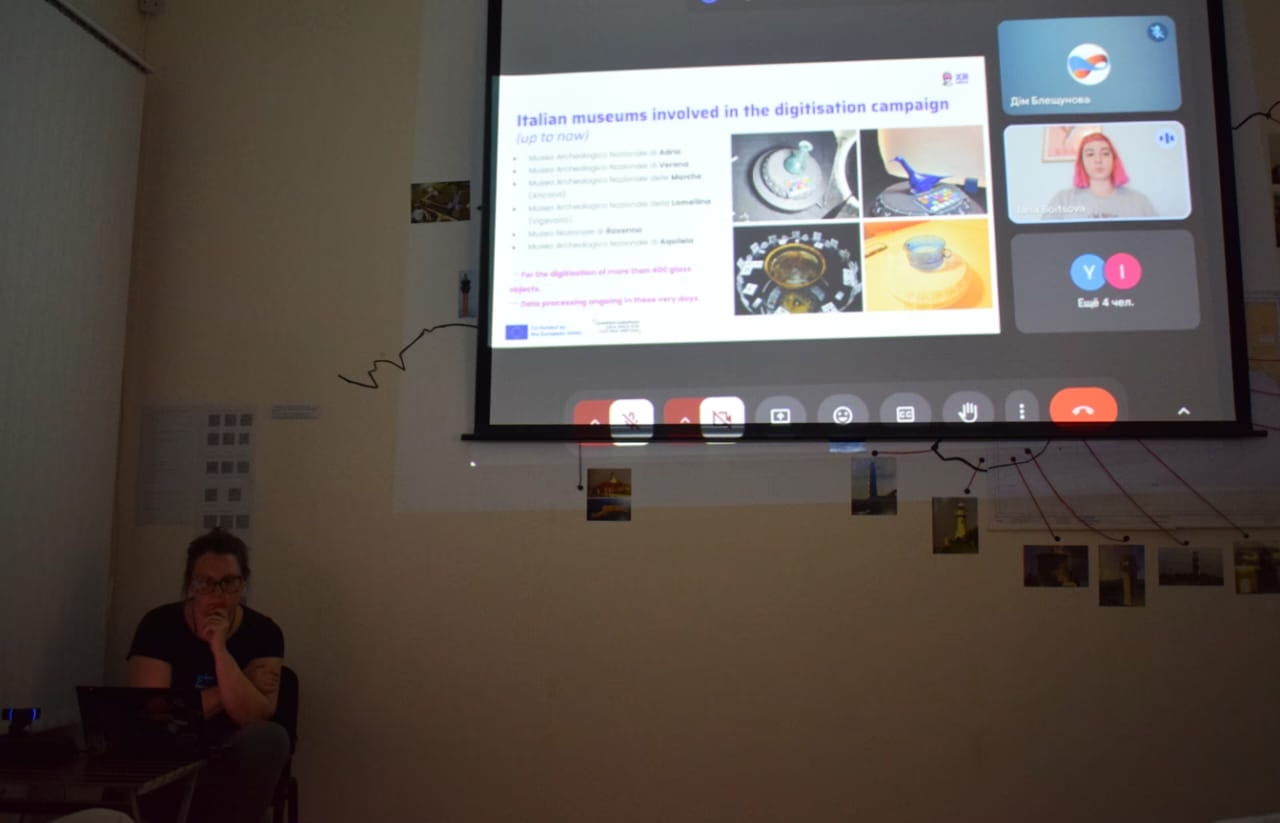
On 30 June 2026 in Odesa, at the Odesa Municipal Museum Of Personal Collections Named after O. V. Bleschunov, Pixelated Realities PO held the final XRculture event in Ukraine, dedicated to the digitisation of cultural heritage, open data, and XR solutions for museums as well as cultural and research institutions. The hybrid-format event brought together museum professionals, researchers, cultural project managers, and everyone working with the preservation, presentation, and digital accessibility of heritage.
The event was opened by Iana Boitsova, Head of the Pixelated Realities PO, who presented the results and achievements of the XRculture project. She explained that members of the XRculture consortium have been working on applying AI-based approaches to create and enhance high-quality 3D models, developing XR scenarios for heritage preservation, and designing solutions for 3D visualisation.
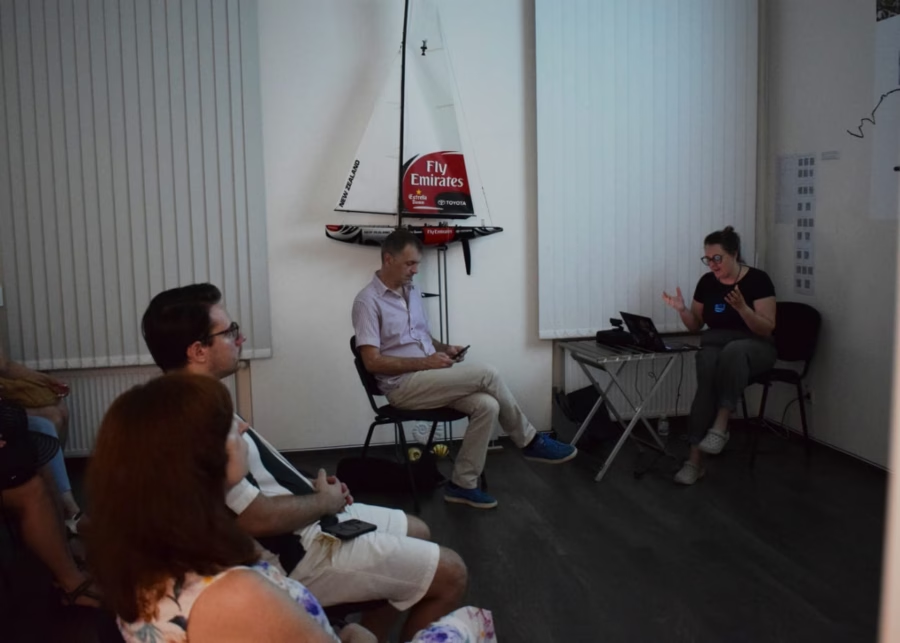
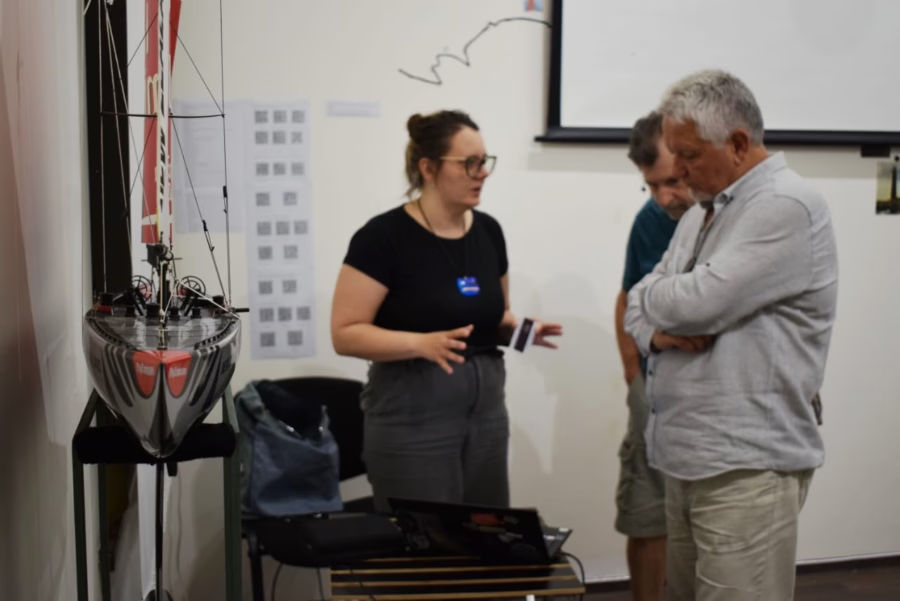
During the meeting in Odesa, these developments were considered in the context of Ukraine’s specific challenges – from the need for rapid digital recording of heritage objects to creating new access scenarios for evacuated and conserved museum collections.
“The collection of the Odesa Municipal Museum Of Personal Collections Named after O. V. Bleschunov is not accessible to visitors in the museum’s exhibition during the war. As early as July 2026, 112 3D models will be aggregated to Europeana and added to the Register of the Museum Fund of Ukraine thanks to the support of the XRculture project,” said Iana Boitsova. “These are objects described with meta- and paradata, endangered Ukrainian heritage that will become a bridge between these two databases. The creation of a national Europeana aggregator based on the Museum Fund Register, which we expect from the Ministry of Culture of Ukraine, will open up a flow of opportunities for our museums and expand access to heritage for Ukrainians.”
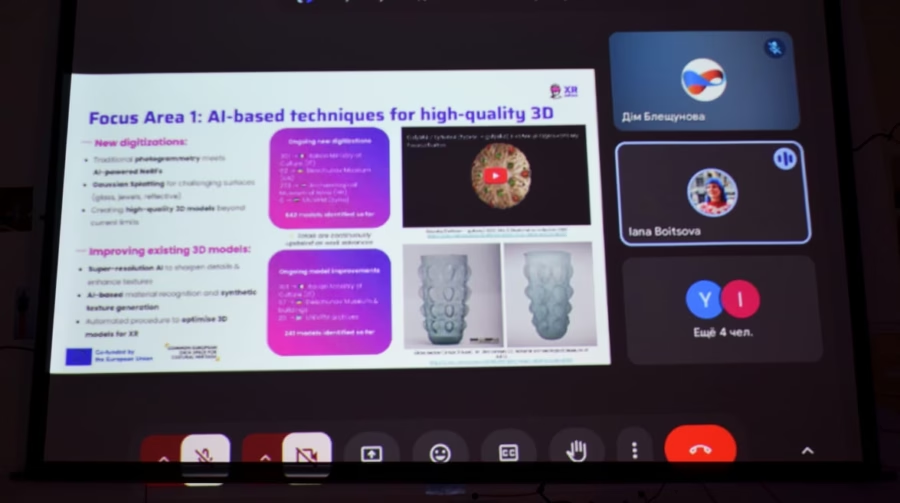
A separate discussion block focused on 3D scanning of complex movable heritage objects, particularly items with shiny, transparent, or materially heterogeneous surfaces. These categories often pose the greatest challenges for high-quality digital recording, while at the same time being extremely important for museum collections.
Participants had the opportunity to see how new approaches to photogrammetry and AI-driven data processing open up new possibilities for more accurate digital representation of such objects.
Henk Alkemade from CARARE addressed the participants with a welcome speech. He presented the work carried out within the XRculture project and emphasised the importance of partnerships between Ukrainian and European institutions, the development of open approaches to working with cultural data, and the broader inclusion of Ukrainian heritage in Europe’s shared digital environment.
The main presentation was delivered by Yuliia Frolova, an architect, architecture researcher, and educational projects manager at the non-profit organisation Pixelated Realities.
She presented the opportunities that Europeana offers for Ukrainian heritage and explained how digital collections, open description standards, and inter-institutional cooperation can enhance the visibility of Ukrainian cultural materials at the European level. Particular attention was paid to the practical aspects of integrating digital objects into an international context and to the role of open data in contemporary museum practice.
During the discussion, participants also addressed the openness of museum data and the readiness of institutions to cooperate with European platforms. They considered whether museums should open up data about their collections, what advantages this provides for researchers, educational initiatives, and international partnerships, and which barriers most often arise at the initial stages of digitisation. The participants noted that data openness can become not only a tool for increasing visibility but also an important part of the European integration process in the cultural sphere.
The event concluded with remarks by Olena Iliasova, Acting Director of the Odesa Municipal Museum Of Personal Collections Named after O. V. Bleschunov. She spoke about the museum’s collections, shared the institution’s experience in digital preservation, and outlined how the museum secures support for scanning its collections and developing contemporary formats for working with heritage. Her contribution added an important practical dimension to the conversation, demonstrating how strategic approaches to digitisation are implemented at the level of a specific museum institution.
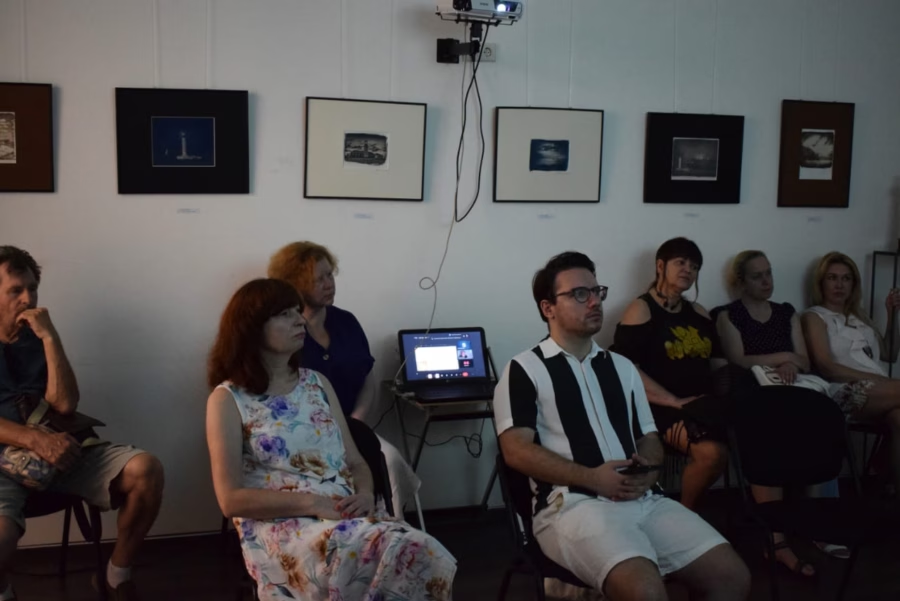
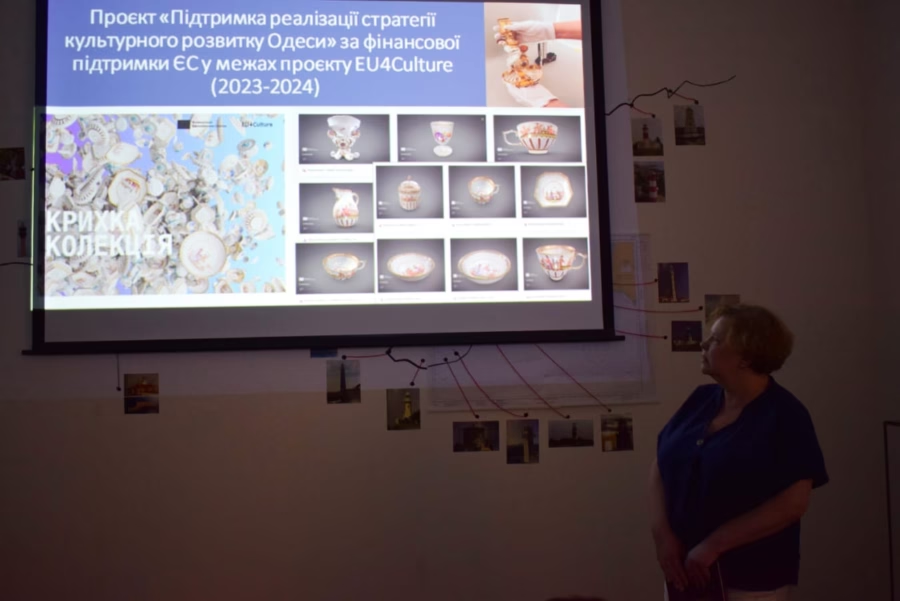
Such events encourage professionals to grow, deepen their competences in digital transformation, and advance their skills in working with open data. They provide new knowledge, practical tools, and ideas for further work with collections, while also creating opportunities to build partnerships and joint projects between Ukrainian and international institutions, particularly in the context of XRculture and broader European initiatives in the field of digital heritage.
Pixelated Realities PO is a consortium partner in XRculture, a project co‑funded by the European Commission under the Digital Europe Programme in Ukraine. The project’s beneficiary in Ukraine is the Ministry of Culture of Ukraine.


